WATER INPUT
Water enters
Water is supplied to the electrolyser system.
H₂O
ASFM COMMODITIES | RENEWABLE ENERGY
Hydrogen is emerging as an important energy carrier for industrial applications, energy storage and transportation. We explore opportunities in the evolving hydrogen market, connecting industrial demand with the future of cleaner energy.
 01HYDROGEN · CLEAN ENERGY
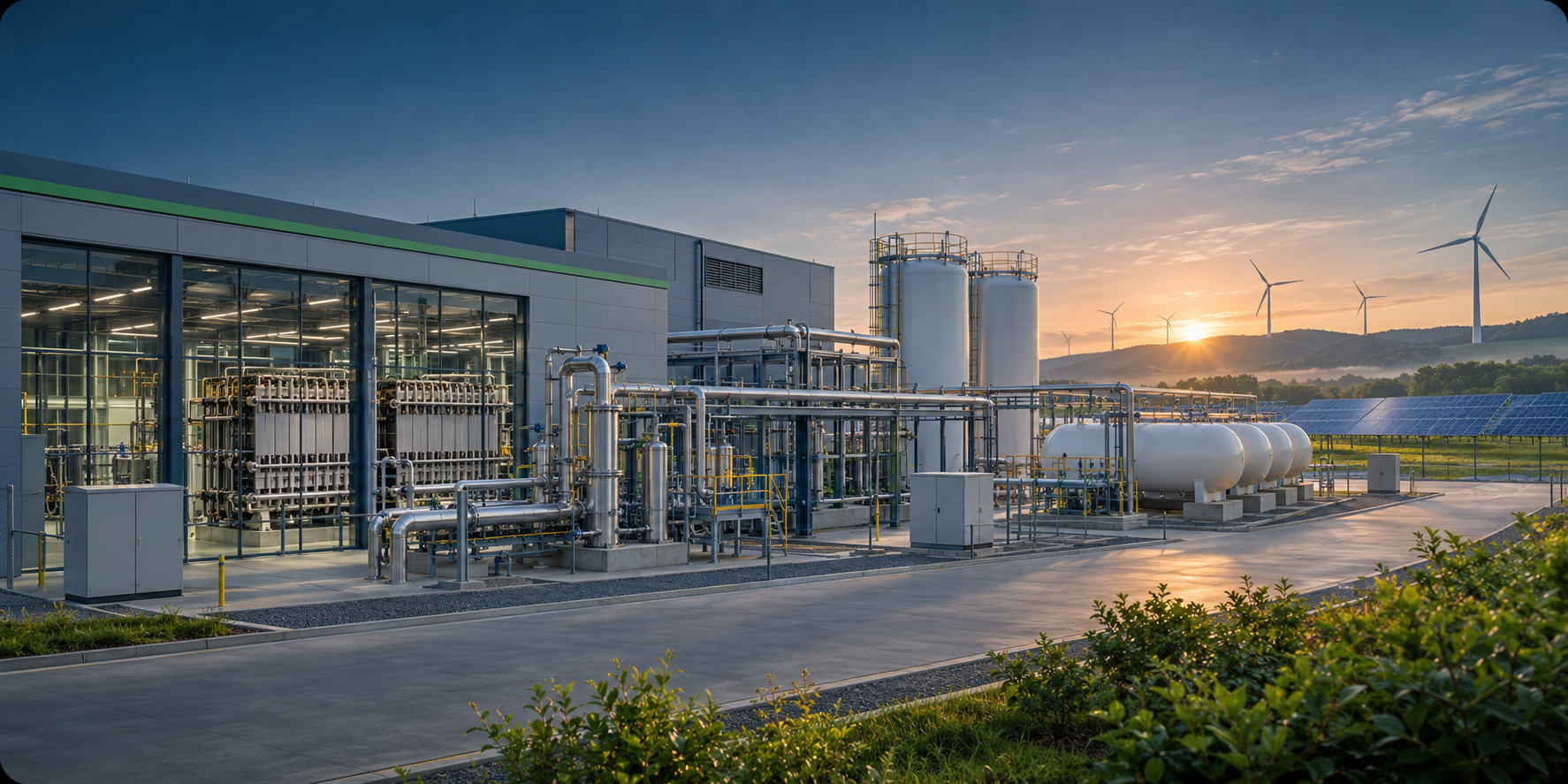
Illustrative visual of a renewable-powered hydrogen production facility.
HYDROGEN TECHNOLOGY
An electrolyser uses electricity to split water into hydrogen and oxygen. It consumes energy to make hydrogen; it does not generate energy.
A hydrogen generator is a device or system that produces hydrogen gas on demand. One important production method is water electrolysis, a process that uses electricity to separate water molecules into hydrogen and oxygen.
During electrolysis, electrical energy is supplied to an electrolyser, which drives the separation of water (H₂O) into hydrogen (H₂) and oxygen (O₂).
When the electricity used comes from renewable sources such as solar or wind power, the resulting hydrogen can be classified as green hydrogen. Hydrogen produced using other pathways has a different emissions profile; its overall climate impact depends on production, storage and transport.
Hydrogen can be stored and used as an energy carrier in applications such as fuel cells, industrial processes, transportation and energy storage. Its potential role in reducing emissions makes it an increasingly important area of development in the global clean-energy transition.
FROM WATER TO HYDROGEN
Electricity in · hydrogen and oxygen out
WATER INPUT
Water is supplied to the electrolyser system.
H₂OELECTRICITY SUPPLY
Electrical energy powers the electrolysis process.
Renewable or grid electricityHYDROGEN SEPARATION
The electrolyser separates H₂O into hydrogen and oxygen.
ElectrolyserOUTPUTS
Hydrogen is collected; oxygen leaves through a separate outlet.
Simplified process illustration. Actual electrolyser systems include additional water treatment, gas separation, purification and balance-of-plant equipment. U.S. Department of Energy: electrolysis.
ENERGY COMPARISON
As industries seek cleaner and more efficient energy solutions, hydrogen offers potential advantages in selected applications when used in fuel cells and supplied through low-emission pathways.
ADVANTAGE 01
HYDROGEN · FUEL CELL
When hydrogen is used in a fuel cell, the main point-of-use outputs are water and heat. It produces no direct CO₂, sulphur oxides or particulate emissions during normal fuel-cell operation.
DIESEL · COMBUSTION
Diesel combustion produces carbon dioxide, nitrogen oxides, particulate matter and other pollutants that affect air quality and contribute to greenhouse gas emissions.
ADVANTAGE 02
HYDROGEN · FUEL CELL
Fuel-cell systems can convert around 50–60% of hydrogen's chemical energy into electricity under suitable conditions. Actual efficiency varies with technology, system design and load.
DIESEL · COMBUSTION
Diesel generator efficiency depends on engine design and operating load. A fair comparison must use comparable equipment, load and system boundaries; not every fuel-cell system outperforms every diesel generator.
ADVANTAGE 03
HYDROGEN · FUEL CELL
Fuel-cell systems generally operate with fewer moving mechanical components than conventional combustion engines. This can result in quieter operation and reduced vibration.
DIESEL · COMBUSTION
Diesel engines generate mechanical noise and vibration through internal combustion and moving engine components, often requiring additional sound insulation and vibration control.
ADVANTAGE 04
HYDROGEN · FUEL CELL
Fuel-cell systems can have fewer routine mechanical servicing requirements than diesel engines because they do not rely on conventional engine oil changes, spark plugs or diesel exhaust-treatment systems.
DIESEL · COMBUSTION
Diesel generators require regular engine oil, filter and fuel-system maintenance, along with servicing of exhaust after-treatment equipment where fitted.
Fuel-cell systems still need specialised inspections, stack maintenance and balance-of-plant servicing. Maintenance costs depend on the system and operating conditions.
ADVANTAGE 05
HYDROGEN · LOW-EMISSION PATHWAY
Low-emission hydrogen can help industrial operators reduce operational carbon emissions and support compliance with evolving decarbonisation policies and environmental targets.
DIESEL · COMBUSTION
Diesel-dependent operations may face increasing pressure from emissions regulations, carbon-reduction policies and restrictions on local air pollutants.
Any emissions or regulatory benefit depends on location, production pathway, end use and applicable legislation. Hydrogen combustion can produce nitrogen oxides; fuel-cell operation is distinct from combustion.
Hydrogen lifecycle emissions depend on production, processing and delivery. The point-of-use statements above describe hydrogen fuel-cell operation, not hydrogen combustion. U.S. Department of Energy: hydrogen fuel basics · Hydrogen pathways and impacts.
INDUSTRIAL APPLICATIONS
Hydrogen has the potential to support decarbonisation across several industrial sectors, particularly where direct electrification can be challenging.
01 / INDUSTRY
Hydrogen is used in industrial processes and can serve as a lower-carbon feedstock or energy source in sectors such as chemicals, refining, steel production and manufacturing, depending on its production pathway.
02 / MOBILITY
Hydrogen fuel cells can power certain heavy-duty vehicles, buses, trucks and specialised transportation systems where range, refuelling time and operating requirements make hydrogen a potential option.
03 / FLEXIBILITY
Hydrogen can store energy produced from renewable sources and potentially provide longer-duration energy storage, helping balance electricity supply and demand.
04 / ELECTRICITY
Hydrogen fuel cells can generate electricity, while hydrogen-capable turbines and other systems are being developed for selected power-generation applications.
Hydrogen applications and sector roles: U.S. Department of Energy: Hydrogen.
A CLEAR ROUTE TO COMPLETION
A structured process keeps each party informed from the first brief through verification, introduction and shipment.
THE BRIEF
Tell us the product, quantity, specification, destination and timing.
DUE DILIGENCE
We check company documents, availability and authority to deal on both sides.
DIRECT CONTACT
We introduce you directly once confidentiality and commission terms are signed.
COMPLETION
We stay with the deal through contract, payment instrument, inspection and shipment.
Exploring hydrogen opportunities?
Speak with our team